Enzymes: the invisible turbos in your body
Reading time: 4-5 minutes
Do you regularly feel tired after eating? Do you suffer from bloating, flatulence or meals that are difficult to digest? Do you notice that your body takes much longer to recover? Then chances are that enzymes are the silent turbos van our metabolism is not functioning optimally. By paying conscious attention to this, you can give your health a big boost.
What are enzymes and why are they essential?
nzymes are proteins, sometimes combined with vitamins or minerals, that function as biological catalysts. That means they speed up biochemical reactions without being consumed themselves. They are the substances that make everything in your body happen properly and effectively with the least amount of energy loss. From digestion to cellular repair, from the entire metabolism to the hormone regulation and From the functioning of the immune system To turning on the mitochondria in your cells. E nzymes are everywhere to turn something on or off like the buttons on a switchboard.
There are three main types of enzymes in the body:
- Digestive enzymes, which break down food into absorbable particles;
- Metabolic enzymes, which control metabolic processes;
- Celenzymes, which guide processes in the cell itself such as DNA replication and cell repair.
An important characteristic of enzymes is that they are temperature and acidity sensitive. They function optimally around body temperature (37°C) and can become unstable above 41°C or at extreme pH levels. Stress, heavy metals such as lead or mercury, and mineral deficiencies can also interfere with enzyme function.
A simple experiment at home:
Fancy a test? Make two bowls of oatmeal. Add to one bowl enzymeand add and to the other not. Let both stand for 45 minutes. The bowl with enzymes becomes more liquid while the other sticky remains. Your body notices that difference too.
Digestive enzymes
Molecularly, different types of enzymes act on the food you ingest:
- Amylase Breaks down carbohydrates into glucose,
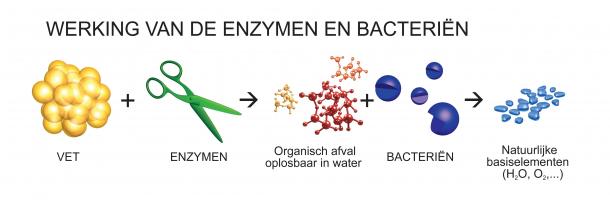
- Lipase Splits fats into glycerol and fatty acids,
- Protease Breaks proteins into amino acids,
- Lactase Helps digest milk sugar.
Without these enzymes, your body has trouble absorbing nutrients, making energy or processing waste products.
The functions of enzymes at a glance
Enzymes are involved in virtually every physiological process:
- Energy production and cell activity
- Digestion of carbohydrates, proteins and fats
- Regulation of cholesterol and triglyceride levels
- Tunnel opening mechanisms for hormones and nerve impulses
- Neutralization of free radicals
- DNA and RNA functions, including telomerase for cell locking and cell division
- Detoxification and immune protection against pathogens
In short, without enzyme-rich functioning, your organic recovery and resilience is under attack on all fronts.
Why does enzyme production decline after age 40?
From the age of 40, the buffers of enzymes (the “enzyme potential”) become depleted and the capacity to make new enzymes diminishes. Dr. Edward Howell aptly wrote about this:
“How long someone lives is directly related to the depletion of their enzyme potential.”
In addition, processed foods, stressful substances and stress put extra strain on the enzyme system. Enzyme-deficient foods cost the body extra minerals and energy to digest. The younger in life this occurs, the sooner there are symptoms such as fatigue, digestive problems, decreased immunity and inflammation.
How do you recognize an enzyme deficiency?
Some signs of enzyme deficiency are:
- Bloating, flatulence and heartburn symptoms
- Difficulty with fat or dairy digestion
- Fatigue after meals
- Slow digestion or diarrhea
- Frequent colds or slow recovery
These symptoms are common and sometimes incorrectly attributed to “old age” or “menopause,” while enzyme support can provide relief.
Enzymes from food: what can you eat?
Enzymes are mainly found in raw or lightly processed foods. Most enzymes are lost above 41°C or by rapid heating. Therefore, choose for slowcooking, the regular eating of raw vegetables and fruits and especially fermented feedsel:
Sun-ripened fwindow: Pineapple (bromelain), papaya (papain), kiwi (actinidain), avocado ( lipase), mango, apple, blueberry, raspberry and banana.
Vegetables and herbs: Onion, garlic, sprouts, endive, asparagus, plus herbs like ginger, thyme, rosemary and basil. Actually, enzymes are in everything especially in vegetables and fruits if they come from the open ground and ripened in the sun.
Fermented products: Kefir, yogurt, sauerkraut, kimchi, miso rich in digestive enzymes and probiotics.
Algae and plant sources: Spirulina and chlorella contain various enzymes and, together with minerals such as zinc, magnesium and manganese, help strengthen enzyme activity.
Supplemental Nutrition: Ox bile as a supplement and pancreatin containsten enzymes to digest fats. This supports the liver .
Supplemental Nutrition: Ox bile as a supplement and pancreatin contain enzymes to digest fats. This supports the liver.flaxseed contains substances which activates P-450 enzymesimportant for detoxification.
Enzyme supplementation: when useful and how to use it?
Supplementation with enzyme complexes can be taken starting at about age 45 or for digestive problems, tired energy levels, low resistance or during detox and fasting periods. Digestive enzymes are taken before or during meals, depending on meal size. If you take the same enzymes on an empty stomach in the morning and an empty stomach before bed, they function as additional cleaners for the body.
In people with insufficient stomach acid, betaine HCL is a useful addition – even though it is not itself an enzyme, it increases the effectiveness of enzymes such as pepsin in the stomach.
Three reasons to use enzymes daily
- Lasting vitality and aging delay – enzymes aid in cell damage repair and reduce aging at the cellular level. Studies show that enzyme activity decreases due to leakage through the intestinal wall in older animals, which breaks down collagen and enhances aging symptoms
- Strengthened resistance and healthier recovery – enzyme disruption is linked to RNA/DNA acuity, immune system energy and inflammation regulation; a microbial enzyme blend restores these functions in the elderly
- More efficient energy absorption – in vitro analyses show that enzyme supplementation in older humans and models significantly improves the absorption of proteins, fats and sugars .
Conclusion
After age 40, you can effectively support your enzyme balance with enzyme-rich foods and possible supplementation. This helps with digestion, energy levels, immune function and cell regeneration. Enzymes are not a luxury , they are the basis of long-term vitality. You don’t have to follow a complicated diet. Start simple: add a little raw vegetables to your lunch (chew well!), eat an occasional papaya or kiwi, drink a glass of kefir or sauerkraut juice and consider a good enzyme complex at your hot meal. The difference? You can often feel it within a few weeks.
Finally, give your body the right fuel
An enzyme deficiency is not a medical emergency, but it undermines your long-term energy, resistance and vitality. Especially as you age. By consciously eating enzyme-rich foods and supplementing as needed, you are giving your body a boost from the inside out.
Literature
Pancreatic enzymes leak through gut: DeLano & Schmid-Schönbein show that with aging, pancreatic enzymes leak outside the gut, break down collagen and cause tissue damage. https://pubmed.ncbi.nlm.nih.gov/39418235/
Digestive enzyme supplementation in digestive problems: Ianir et al. (2016) discuss applications in EPI, lactose intolerance and celiac disease https://pmc.ncbi.nlm.nih.gov/articles/PMC4923703/
Lasting vitality and aging delay
https://pmc.ncbi.nlm.nih.gov/articles/PMC4923703/
https://pmc.ncbi.nlm.nih.gov/articles/PMC11941177/
Howell, E. (1985). Enzyme Nutrition: The Food Enzyme Concept. Avery Publishing Group.
Martinsen, B. et al. (2005). “Effect of digestive enzyme supplementation on gastrointestinal symptoms in patients with irritable bowel syndrome.” Scandinavian Journal of Gastroenterology., 40(9), 919-923.
Whitcomb, D.C. (2004). “Mechanisms of Disease: Advances in Understanding Chronic Pancreatitis.” Nature Clinical Practice Gastroenterology & Hepatology., 1(1), 45-52.
Schroeder, T. H., & Becker, J. (2013). “The role of enzyme therapy in anti-aging medicine.” Alternative Therapies in Health and Medicine., 19(3), 42-48.